The body politic
The Social ContractThe body politic is the collective moral person formed when individuals associate under a social compact. Rousseau’s organic analogy gives this political community a shared life: its members are not merely placed beside one another but connected through reciprocal obligations, common laws, and a general will. The image explains both the grounds of legitimate political order and the conditions under which that order can weaken or dissolve.
Formation and Collective Identity
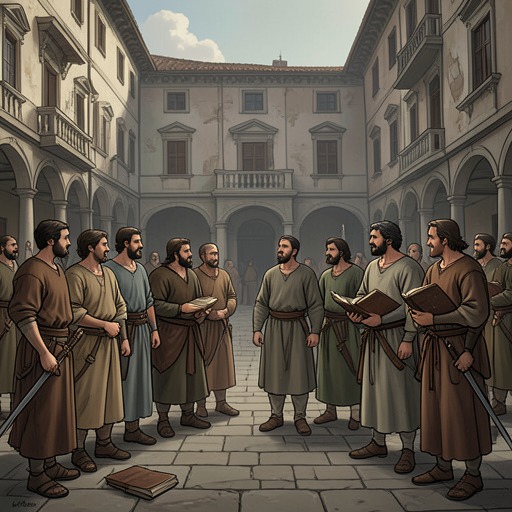
The body politic begins with a problem of self-preservation. Individuals need to combine their existing forces to meet dangers they cannot overcome alone, yet association must not reduce each person to dependence on another. Rousseau frames the solution as an association that protects the person and goods of every member through common force, while allowing each, in joining with all, to obey himself and remain as free as before. The compact is not simply an agreement to submit to a ruler; it establishes a collective political person whose authority rests on the association of its members.
The compact’s essential condition is the complete contribution of each associate and all his power to the community, placed under the supreme direction of the general will. Because everyone gives himself on the same terms, no individual has an interest in imposing harsher conditions on another. Each also receives the others as an indivisible part of the whole. The reciprocal arrangement is meant to turn a potentially unequal relation among individuals into membership in a common body.
The act of association creates a moral and collective person in place of the separate personalities of the contracting parties. Its members give it unity, a common identity, life, and will. Rousseau distinguishes the names this public person bears according to its relation or activity: it is the State when considered passively, the Sovereign when acting, and a Power when compared with other political bodies. The associated people are citizens insofar as they share in sovereign authority and subjects insofar as they are under the State’s laws. These are not separate populations but different descriptions of members within the same political association.
The Organic Analogy and Its Parts
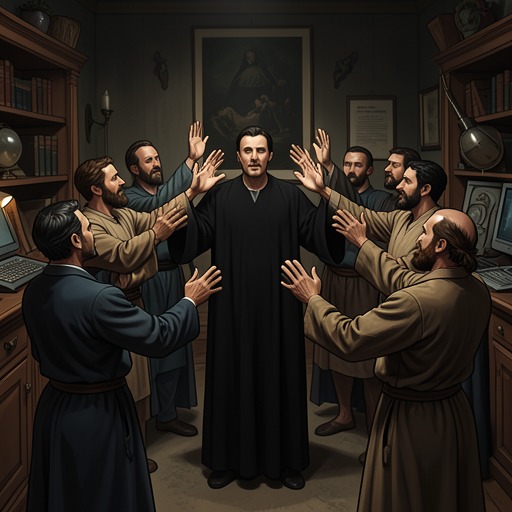
Rousseau makes the political body concrete by comparing it with an organized living body. Sovereign power is its head. Laws and customs form its brain, the source of understanding and will; judges and magistrates are the organs through which these functions operate. Commerce, industry, and agriculture resemble the mouth and stomach, preparing the common subsistence. Public income is likened to blood, while prudent public economy performs the heart’s work by distributing nourishment and life throughout the whole. Citizens are the body and its members, making the political machine live, move, and work.
The analogy depends not merely on having parts but on communication among them. In a healthy political body, damage to one part conveys a painful impression to the whole. Its life consists in a shared self, reciprocal sensibility, and internal correspondence among its parts. When communication ceases, formal unity disappears, and the parts remain together only by juxtaposition, the human body is dead or the State dissolved. The comparison therefore defines political unity as an active relation, not as a name imposed on a collection of individuals.
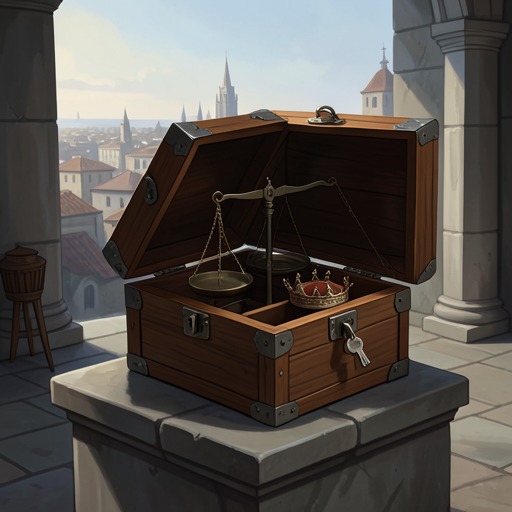
This account also clarifies the distinction between sovereignty and government. Sovereignty holds the legislative authority; government, or public economy in Rousseau’s terminology, executes what has been established and binds individuals in that capacity. The sovereign power is the head in the organic comparison, while the executive functions belong to the working organs of the political system. Government can act as the community’s instrument, but it is not identical with the community’s sovereign will.
The General Will, Law, and Justice
The body politic is a moral being possessed of a will. Rousseau identifies this general will as oriented toward the preservation and welfare of the whole and every part, and as the source of laws. It provides a common rule of justice for the members in their relations to one another and to the political community. Law is thus not merely an order imposed from outside: it proceeds from the citizens who have constituted the State and expresses the common authority that binds them.
The political body’s general will must be distinguished from the will of a smaller association within it. A society formed around a shared interest may have a will that is general for its own members, yet particular in relation to the larger community. Such smaller societies can modify the public will through their influence. The organic image makes the issue legible: the existence of parts and subgroups does not itself destroy the whole, but their interests can pull against the common direction that holds the whole together.
Rousseau also marks a limit to the general will’s reach. A State’s will is general in relation to its own members, but becomes particular when directed toward foreigners and other States. In that wider relation, the law of nature supplies the rule of justice; the great city of the world can, in turn, be conceived as a larger body politic whose members are different States and peoples. The analogy therefore does not make a single State the measure of justice in every relation. It distinguishes internal political membership from relations beyond that membership.
Mutual Security and Political Freedom
The unity of the body politic makes injury to a member a matter for the whole. Because the community is composed of its members, an offense against one also attacks the body, while an offense against the body gives its members cause to respond. Duty and interest consequently support mutual assistance between the contracting parties. The collective person is not separate from its members in the manner of an outside power: its existence and welfare depend on their connection and security.
That connection is also the basis of Rousseau’s claim that the political compact must be effective rather than an empty formula. An individual may pursue a particular will contrary to the general will, treating contributions to the common cause as burdensome while seeking the benefits of citizenship. Rousseau argues that the whole body must be able to uphold the compact when a member refuses its common terms. In his formulation, being compelled to obey the general will is being forced to be free: the point is to secure citizens against personal dependence by making their obligations part of a common political order, rather than leaving them subject to another individual’s will.
The transition into the civil state changes the terms of liberty. Members lose natural liberty, bounded only by individual strength, and an unlimited claim to whatever they can obtain; they gain civil liberty, limited by the general will, and property grounded in a positive title rather than force or first occupancy alone. Rousseau also describes moral liberty as self-mastery through obedience to a law one prescribes to oneself. The body politic, on this account, does not preserve freedom by leaving every person wholly unconstrained; it seeks to make common legal obligation compatible with freedom from private domination.
Vulnerability, Decline, and Dissolution
The political body is not immortal. Its own structure contains a continuing source of danger: the particular will of government acts against the general will of sovereignty. As that pressure grows, the constitution changes. Government may contract from the many to the few, moving from democracy to aristocracy and from aristocracy to royalty. Rousseau presents this narrowing as government’s natural tendency, while distinguishing it from the dissolution of the State itself.
Dissolution occurs when the prince stops administering according to law and usurps sovereign power. The resulting change is not simply a new arrangement within the same body politic: a smaller body, consisting of the government’s members, forms within the larger one, while the rest of the people are reduced to subjects of a master. At that point the social compact is broken, and private citizens recover their natural liberty; their obedience is imposed rather than owed as a legitimate obligation. If individual officeholders separately seize powers that belong to the government as a body, the division can become still more extensive, leaving as many princes as magistrates and putting the State at risk of perishing or changing its form.
Rousseau compares political decline to aging and death in a human body, but the analogy does not imply that political life is beyond human care. A State begins to die as soon as it is born and carries the causes of destruction within itself; nevertheless, its constitution can be more or less robust. Nature determines the human constitution, whereas the State’s constitution is a work of art that people can improve to prolong the community’s life. No State can be made eternal, but a well-constituted one may last longer unless unforeseen events bring its end sooner.
In this account, sovereign authority is the body politic’s life-principle. Legislative power is its heart, while executive power is its brain: the brain may be paralyzed while the organism continues to live, but when the heart ceases to function, the animal is dead. Rousseau applies the image to the continuing force of legislation as well. A law persists not simply because it is old; the sovereign is understood to reaffirm laws it does not repeal. Their survival can therefore show continuing recognition, while the weakening of old laws signals that legislative authority has ceased to animate the State.
Political Meaning of the Image
The body politic brings together Rousseau’s claims about legitimacy, law, freedom, and political survival. Its parts are held together not by physical proximity or governmental force alone, but by a shared act of association and ongoing reciprocal connection. The general will supplies a common source of law; sovereign authority gives the community its legislative life; and citizens both constitute the public person and live under its laws. The image makes political responsibility reciprocal: the welfare of a member concerns the whole, and damage to the whole reaches its members.
The metaphor also exposes the difference between an active political community and a merely nominal unity. If citizens’ interests cease to correspond, if smaller associations redirect public decisions toward particular ends, or if government substitutes its own will for sovereign authority, the body’s internal communication is impaired. The State may retain its offices and outward form while its common life ebbs. For Rousseau, the decisive measure of political unity is therefore not that a government continues to issue commands, but that the community’s members remain connected through common authority, law, and concern for one another.